Samsung Unveils the Galaxy Z TriFold: A Crease-Free Foldable Breakthrough

Samsung’s Galaxy Z TriFold stands as one of the brand’s most ambitious device launches yet—though key specs are still under wraps.
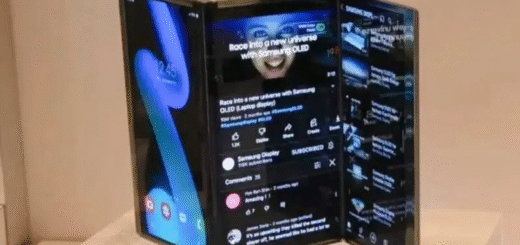
The device made its public debut behind glass at Korea’s K-Tech Showcase, living up to its name with a dual-folding design. It unfolds twice to transform from a compact smartphone into a tablet-sized display, then folds back down for on-the-go use.
Hinge Innovation Takes Center Stage
Notably, early observers highlighted the absence of a visible crease—an impressive leap in hinge engineering. Rumors suggest the TriFold will pack the Snapdragon 8 Elite chip, with Samsung planning a limited regional rollout first. The initial launch is set to target its home market, along with China and the UAE.
The device also made an appearance at the 2025 Asia-Pacific Economic Cooperation (APEC) Summit, confirming its upcoming release under the Galaxy Z TriFold name. Measuring roughly the size of a 10-inch tablet when fully open, it features a smart battery setup: each panel houses its own 4,400mAh module. This is a crucial choice, as multi-panel OLED displays—especially on a device this size—tend to drain power quickly.

Specs and Form Factor Details
While details remain scarce, onlookers noted the TriFold’s 4.2mm thickness when unfolded. That’s on par with the Galaxy Z Fold 7’s unfolded profile, a remarkable feat considering the extra folding section. When closed into phone mode, the three stacked layers push thickness to 1.2–1.5cm—far bulkier than a standard smartphone, but expected for a tri-fold design.
The heft might make for an awkward grip, but it’s a tradeoff for the expanded screen real estate.

A Cautious Rollout Ahead
Samsung is taking a conservative approach with the TriFold’s release. Production is limited to 50,000–200,000 units, and pricing is pegged at around $2,800 (equivalent to ₩4 million)—nearly double the cost of the Galaxy Z Fold 7. The official launch won’t arrive until 2026.
This small-batch strategy makes sense. Samsung’s flagship S-series typically ships in the millions, while the regular Fold line moves hundreds of thousands to over a million units per model yearly. Unconventional devices like the TriFold carry financial and reputational risks—something Samsung knows well. The first Galaxy Edge failed to impress, leading the company to retain the S-series Plus model it was supposed to replace.

Global Release Still Possible
Despite the limited initial rollout, the TriFold has already earned official Bluetooth certification. It’s listed under six model numbers, with two appearing to be international variants. This hints at potential launches beyond the initial regions, possibly including Europe, Taiwan, and Singapore.
I still find it hard to get on board with the hype around foldables—we solved the “big screen in a small package” problem years ago with tablets. No universal everyday use case justifies the steep price tag and fragility risks of bendable phones, and the TriFold feels like just another twist on the same concept. That said, you can’t deny the years of engineering Samsung has invested in perfecting hinge durability—and it’s exciting to see that work finally come to light.
Would you like me to tweak the tone to be more tech-review focused, or expand on any section (like potential use cases for the tri-fold design) to better resonate with U.S. readers?