MediaTek Kompanio 540: Bringing the “Cool” Back to School Chromebooks

The Chip That Boosts Performance and Battery Life for Student Laptops
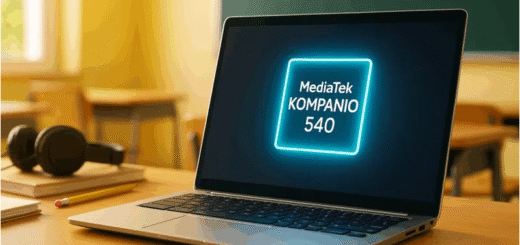
Whether it’s in a bustling high school classroom, a quiet college study hall, or a home desk set up for remote learning, today’s students need more from their Chromebooks than just a working browser. They’re juggling homework, video lectures, group projects, and even casual streaming—and their devices have to keep up. Enter MediaTek’s new Kompanio 540: a processor built specifically to redefine what education-focused Chromebooks can do. MediaTek says the chip is engineered “to deliver exceptional power efficiency for thin, ultra-portable Chromebooks”—a direct response to what students actually need.

Design & Build: Made for Classroom Life
The Kompanio 540’s architecture is tailored to handle the messy, on-the-go demands of student life, with key features that prioritize efficiency and practicality:
- An octa-core processor anchored by two high-performance ARM Cortex-A78 CPUs, paired with a dual-core graphics engine. This setup balances speed for schoolwork and smoothness for lighter tasks like streaming.
- Support for premium LPDDR5 memory and UFS 3.1 storage. For students, this means faster load times for apps, smoother switching between browser tabs, and quicker access to files—no more waiting around while a textbook PDF or Tinkercad project opens.
- Fanless operation. Thanks to its power-efficient design, Chromebooks using this chip can skip the fan entirely. That translates to quieter laptops (perfect for libraries or silent study sessions) and lighter builds (easier to haul in a backpack).
- Launch timing: Chromebooks powered by the Kompanio 540 will hit store shelves starting in January 2026.

In short, this chip is meant to deliver a “premium-mainstream” experience—step up from cheap, basic Chromebooks, but still accessible for schools and families. For anyone testing or reviewing these devices, that means more responsiveness and less overheating, even when students push the laptop hard.
Performance: No More Lag for Multitasking Students
MediaTek is leaning into upgrades over its previous generation (the Kompanio 520), and the improvements matter for daily student use:
- Better cores: The shift to two Cortex-A78 CPUs is a key upgrade—this is a step up from the Kompanio 520’s Cortex-A76 cores (paired with six A55 cores). For students, this means snappier performance when running multiple apps at once.
- Longer battery life: MediaTek claims the Kompanio 540 delivers up to 35% more battery life than competing chips—specifically, when compared to the Intel® Processor N150 in targeted YouTube streaming tests. That’s a huge win for all-day school use.
- Smooth multitasking: The chip is built to handle the chaos of student life: switching between a research tab, a Zoom lecture, and Minecraft Education Edition, or even more demanding tools like STEM software or 3D modeling apps—without the lag that breaks focus.

From a reviewer’s perspective, this is game-changing. Kompanio 540-powered Chromebooks should feel less “sluggish” when juggling 10+ browser tabs, opening large documents, or running web-based coding tools—exactly the kind of work students do every day.
Battery Life & Efficiency: All-Day Power for On-the-Go Students
For students, a Chromebook that dies mid-day is useless—and the Kompanio 540 is designed to fix that:
- The 35% battery boost (vs. Intel N150 in streaming tests) isn’t just a marketing number. It’s a promise that students can go from first period to after-school study hall without hunting for an outlet.
- Fanless, cool-running design: No fan means no distracting noise during lectures, and less heat means the chip won’t slow down (a problem called “thermal throttling”) when used for hours. Lighter builds also make these Chromebooks easier to carry.
- Practical use case: If older entry-level Chromebooks typically lasted 8–10 hours under moderate use, the Kompanio 540 could push that to 11–13 hours (depending on screen brightness, WiFi use, and battery size). That’s enough for a full day of classes, a post-school project, and even a quick video call—no charger panic required.
Software & Features: Making ChromeOS Better
While MediaTek doesn’t dive deep into software, the Kompanio 540’s hardware upgrades make ChromeOS work harder for students:
- Efficient video decoding: Streaming lectures or educational videos (even on an external monitor) won’t drain the battery quickly—ideal for long study sessions.
- Faster wake-up and boot times: Thanks to LPDDR5 memory and UFS 3.1 storage, students can open their Chromebook between classes and be ready to work in seconds, not minutes.
- School-friendly IT: For schools, managed Chromebook environments need devices that are low-maintenance and durable. The Kompanio 540’s efficiency means fewer replacements and less time spent troubleshooting— a win for IT teams.

For tech-savvy readers, this adds up to better “value per experience.” Kompanio 540 Chromebooks avoid the compromises of older ARM-based models, making them a smarter pick for education.
Verdict: The Next Step for School Chromebooks
If you’re looking ahead to the next generation of student Chromebooks, the MediaTek Kompanio 540 is a standout. It’s not just a faster chip—it’s a chip built for students: better cores, longer battery life, and a design that fits how kids actually use their laptops.
Of course, real-world performance will still depend on how manufacturers (OEMs) build the devices: battery size, screen efficiency, and ChromeOS optimizations all matter. But the Kompanio 540 sends a clear message: “budget Chromebooks” don’t have to be “bad Chromebooks” anymore. They’re maturing—with better hardware and fewer trade-offs.

In short, this is what a next-gen classroom Chromebook should feel like: not just good for browsing, but built to keep up with a full day of learning, creating, and collaborating.
Key Specs (As Reported)
- 8-core CPU: 2 × ARM Cortex-A78 (plus additional cores for balanced performance)
- Dual-core graphics engine
- Memory support: LPDDR5 (faster, more efficient than older standards)
- Storage support: UFS 3.1 (quicker app and file access)
- Battery life: Up to 35% longer vs. Intel N150 (in specific YouTube streaming tests)
- Design: Fanless, lightweight, and cool-running (ideal for school use)
- Availability: Chromebooks powered by the chip launch in January 2026